West Virginia reporter Ken Ward Jr. wins prestigious MacArthur 'Genius Grant.'

A career spent "revealing the human and environmental toll of natural resource extraction in West Virginia and spurring greater accountability among public and private stakeholders."

Investigative journalist Ken Ward, Jr. won a MacArthur "Genius Grant" Thursday for his work spent writing about the people in his native West Virginia and Appalachia, reporting on the coal industry, environmental pollution, and corporate misconduct.


As a staff writer for the Charleston Gazette-Mail for more than 25 years, Ward "fearlessly reports on worker safety violations, environmental hazards, and corporate malfeasance of regional coal and chemical companies," the foundation said.

"He employs familiar tools of the journalistic trade—documentary discovery, Freedom of Information Act filings, one-on-one interviews and the like—but through a combination of tenacity, curiosity, and compassion for the residents of his home state, his investigations uncover the larger context surrounding specific incidents and inspire empathy for victims and their families."

Ward is one of 25 so-called geniuses recognized by the foundation for their creativity and potential to "innovate, take risks, and pursue their creative vision."

Other winners include the Rev. William J. Barber II, a social justice advocate and pastor of the Greenleaf Christian Church in Goldsboro, N.C., poet Natalie Diaz from Tempe, Ariz., and Princeton University mathematician Allan Sly. The 2018 MacArthur Fellows each receive a no-strings attached $625,000 award.

"Working in diverse fields, from the arts and sciences to public health and civil liberties, these 25 MacArthur Fellows are solving long-standing scientific and mathematical problems, pushing art forms into new and emerging territories, and addressing the urgent needs of under-resourced communities," said Cecilia Conrad, managing director of the MacArthur Fellows Program. "Their exceptional creativity inspires hope in us all."

Ward has spent decades of exposing the true economic, social, and health impacts of industrial abuse on Appalachian residents and communities. One recent investigation uncovered decades of government inaction around black lung disease that allowed it to continue to afflict miners even as regulators and politicians assured the public it was no longer a threat.

His reporting on a 2014 chemical spill that contaminated the drinking water of 300,000 people included an examination of the widespread lack of emergency planning and accident prevention in the coal and chemical industry. In his current work for the ProPublica Local Reporting Network, the foundation said, he is investigating the growth of the natural gas industry in West Virginia and its impact on communities and the environment.

Ward graduated from West Virginia University in 1990 and began working at the Charleston Gazette-Mail a year later. He is a member of Investigative Reporters and Editors and the Society of Environmental Journalists.

A lithium cell battery with wires attached to it

Old but full of energy: Giving EV batteries a second life

A B.C.-based startup is giving worn-out electric vehicle batteries a second life, repurposing them into modular energy storage systems that cut emissions, reduce waste and help communities shift away from fossil-fuel power.

A reservoir with a dam with green mountains in the background

Reservoir hogs

In France, new reservoirs are destroying ancient riparian systems. What form should resistance take?
a glass of wine with smoke coming out of it

Can we save wine from wildfires?

The wine industry has lost billions of dollars, largely because smoke makes the drink taste like licking an ashtray. Now a team of scientists is chasing a solution.

A tractor putting fertilizer on a farm field

France, Italy push to exempt fertilizers from EU carbon border levy

France and Italy are seeking to exclude fertilizers from the European Union's carbon border levy, at least temporarily, saying an exemption is needed to protect struggling European farmers.

A worker installing electronics in a large industrial cabinet

South Carolina’s AI and data center push exposes a racial divide

Four million Americans live within 1 mile of a data center. The communities closest to them are “overwhelmingly” non-white.
President Donald Trump speaking into a microphone
Credit: Gage Skidmore/https://www.flickr.com/photos/gageskidmore/https://creativecommons.org/licenses/by-sa/4.0/

Trump taking ‘drill, baby, drill’ plan to Venezuela ‘terrible’ for climate, experts warn

‘Everybody loses’ if production is supercharged in a country with the largest known oil reserves, critics say.

A refinery at night in front of a water source

What Trump’s Venezuela strategy means for Black communities

Environmental justice advocates warn that refining Venezuelan oil will concentrate more pollution and cancer risk in majority-Black communities along the Texas and Louisiana Gulf Coast.

From our Newsroom
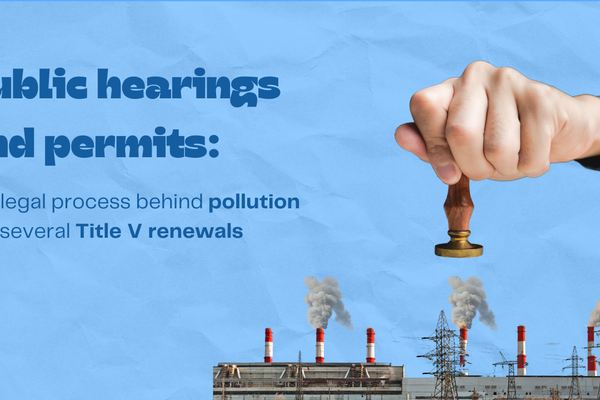
Multiple Houston-area oil and gas facilities that have violated pollution laws are seeking permit renewals

Multiple Houston-area oil and gas facilities that have violated pollution laws are seeking permit renewals

One facility has emitted cancer-causing chemicals into waterways at levels up to 520% higher than legal limits.

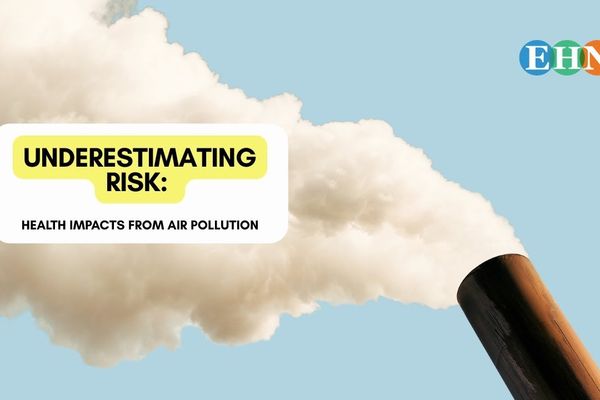
Regulators are underestimating health impacts from air pollution: Study

Regulators are underestimating health impacts from air pollution: Study

"The reality is, we are not exposed to one chemical at a time.”

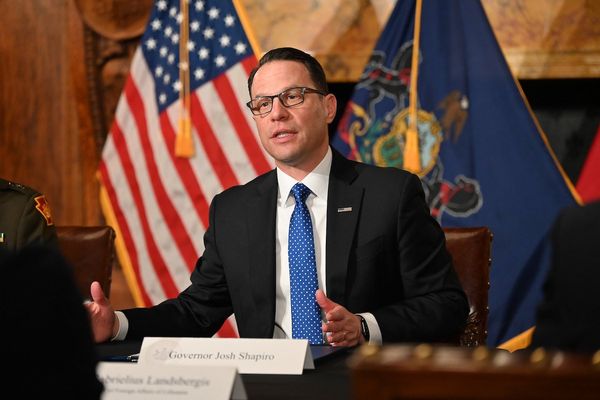
Pennsylvania governor Josh Shapiro speaks with the state flag and American flag behind him.

Two years into his term, has Gov. Shapiro kept his promises to regulate Pennsylvania’s fracking industry?

A new report assesses the administration’s progress and makes new recommendations

silhouette of people holding hands by a lake at sunset

An open letter from EPA staff to the American public

“We cannot stand by and allow this to happen. We need to hold this administration accountable.”

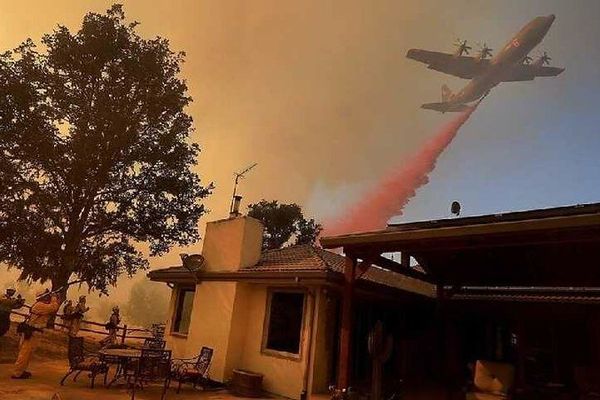
wildfire retardants being sprayed by plane

New evidence links heavy metal pollution with wildfire retardants

“The chemical black box” that blankets wildfire-impacted areas is increasingly under scrutiny.

Stay informed: sign up for The Daily Climate newsletter
Top news on climate impacts, solutions, politics, drivers. Delivered to your inbox week days.