

air_stratospheric_ozone

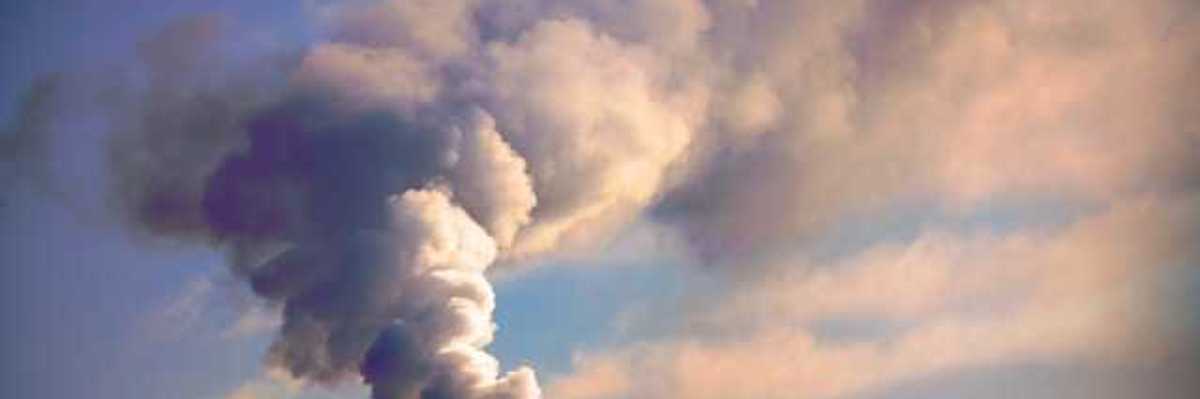

The birth—and possible death—of the Sage III atmospheric satellite.
These are exactly the types of space missions that could be in jeopardy in the coming years, as the Trump administration continues active hostility toward climate research.
On the upcoming SpaceX CRS-10 mission, a rocket will launch carrying the next batch of cargo to the International Space Station. Inside its Dragon capsule’s unpressurized trunk will be a critical Earth-facing instrument—one that maps ozone molecules and other compounds in the atmosphere. Its name is the Stratospheric Aerosol and Gas Experiment III, or SAGE III.
When the Dragon arrives at the ISS, a robot arm will reach into the trunk, pull out the experiment’s parts, put them together, and install them on the outside of the habitat. Scientists at NASA’s Langley Research Center will watch streaming video of their baby being assembled, breaths held till everything is in place.
Then, for at least three years, SAGE III will stare down at Earth, measuring and mapping the atmospheric ingredients that help scientists understand, among other things, how and why the planet warms and cools. Those are exactly the types of space missions that could be in jeopardy in the coming years, as the Trump administration continues active hostility toward climate research. SAGE III, launching so soon, is hopefully safe. Its observations will speak to how good a job we’ve done of repairing our planet—and what will happen to the atmosphere in the future.
A Three-Generation Experiment
SAGE III builds on the legacy of its grandparent and parent missions. SAGE I went to space in 1979, and its look at Earth gave a baseline knowledge of how ozone, aerosolized particles, and nitrogen dioxide are distributed in the stratosphere. In 1984, SAGE II rocketed upward and made the same measurements for 21 years. Together, the missions provide the kind of long-term dataset scientists need to understand how the down-low parts of the planet respond to the up-above changes, and vice versa.
In the 1980s and ’90s, the ozone above our heads was diminishing—globally, but especially in the infamous “ozone hole” above Antarctica. Joe Zawodny, the current program’s project scientist, says the SAGE data was vital in demonstrating that decline. Seeing such concrete effects on our atmosphere, international leaders enacted the 1989 Montreal Protocol, an international treaty in which countries agreed to gradually stop making the stuff that eats through ozone, like Freon. After the Protocol went into effect, SAGE datasets also showed it was working: The ozone levels looked better and better.
“The science community came together with their evidence, presented their cause and effect, and legislators worldwide took action,” says project manager Mike Cisewski.
The scientists now anticipate pointing to SAGE III’s data, which they hope to begin collecting in March, for further positive evidence. “We expect ozone to have recovered halfway from its decline in the ’97 time period,” says Zawodny.
SAGE III will also measure aerosols—little particles of whatever. Most of them come pouring out of volcanoes, but they also come from blow-up desert dust, fires, and human-made pollutants. Aerosols mess with ozone, cloud formation, and climate. They actually—wait for it—cool Earth’s surface temporarily. “[That] puts noise in the temperature records,” says Zawodny. “So if you want to understand changes in global temperature, you have to account for aerosols.”
Without missions like SAGE, in other words, climate scientists would be missing edge pieces of their puzzle.
NASA in the New Era
But in a political era when the House Committee on Science, Space, and Technology wantonly tweets Breitbart articles denying climate change, scientists are worried about the future of Earth studies at NASA. Will there be budget cuts? Slashed projects? Or transferred ones? Trump science policy advisor Bob Walker, for instance, suggested moving home-planet research from NASA to the National Oceanic and Atmospheric Administration.
Dave Young, the head of the science directorate at NASA’s Langley Research Center—SAGE’s home institution—says this is not the first time someone has suggested consolidating Earth-science programs. It makes philosophical sense (kind of). But it doesn’t make physical sense: NOAA is not a space agency. They don’t build space stuff. In fact, NASA currently builds the satellites that NOAA uses to do things like weather prediction; NOAA just operates them. “Quite frankly, they don’t have the capability we have at NASA,” says Young. “We are the civilian space agency. Right now, without transferring a lot of assets to them—people, facilities, everything—they could not do it.”
And besides, he continues, it’s all speculation. No one knows what will happen (just try to predict 2017—I dare you).
What we do know is that the new administration has limited public communications from the likes of the Environmental Protection Agency and the Department of the Interior (what’s up, @BadlandsNPS). But Joseph Atkinson, NASA-Langley’s Earth Science public affairs specialist, says (at least his part of) the space agency has received “no guidance or instructions on any of our public affairs efforts.”
Yet.
So far, the only order affecting NASA, along with all other federal agencies, is a hiring freeze (Jimmy Carter and Ronald Reagan also made full-on freezes; George W. Bush and Obama froze certain agencies). And one of NASA’s two new presidential liaisons actually worked as an atmospheric scientist at NASA’s Goddard Space Center (before he worked as a Trump campaign data analyst). But the agency doesn’t yet have a new administrator, a presidentially mandated plan for the future, or a muzzle on either their climate science or its communication.
And so SAGE III and its measurements move forward—toward the launch pad, toward space, toward a clearer view of our planet and its future.
Cisewski, for his part, feels excited about SAGE’s contribution not just to science and the people but also to policy. “We’ll close the loop and provide politicians and legislators with evidence that the action they took [with the Montreal Protocol] and the belief they put in us—their trust in our sound science—was founded and paid off,” he says. “It was the right action.”
And whether more sound science, from SAGE III and other Earth-watching instruments, will engender more trust and more action in this brave new world—well, that remains to be seen. But these scientists plan to put the data, and their conclusions, out there. Around six months from launch, the team will release the first batch of observations, making SAGE III’s numbers available to the public. For the good of international science community—for you and for me and for the entire human race.
Keep reading...Show less
Pollution from India and China has reached the stratosphere.
Pollutants from China and India, are not only increasing in quantity, but are also being pumped to greater heights in the atmosphere, thanks to the South Asian summer monsoon system, scientists have discovered.
Monsoon storms are pumping pollution from India and China over the Himalayas and into the stratosphere, speeding up global warming.
Pollution from India and China has reached the stratosphere
Image credit: NASA
5 hours ago
T.V. Padma
Share
Tweet
Share
Tweet
Pollutants from China and India, are not only increasing in quantity, but are also being pumped to greater heights in the atmosphere, thanks to the South Asian summer monsoon system, scientists have discovered.
In turn, this pollution is affecting the very pattern of the South Asian monsoon. The polluting aerosols, from the burning of fossil fuels and, to a lesser extent, biomass, also absorb heat from the sun’s radiation, further increasing global warming.
A new paper published in the journal Climate Dynamics in November concludes that aerosols have strong impacts on regional monsoon rainfall and circulation. The scientists found that the complex and steep topography of the Himalayan foothills helps in the build-up of thick layers of dust aerosols transported by monsoon winds from the Arabian deserts across the Arabian Sea. This build-up of aerosols causes the monsoon to arrive early.
These findings are important not only for climate change, but also for predicting the Asian monsoon in the future.
A team of scientists headed by William Lau from the Earth Science Interdisciplinary Center, University of Maryland, studied the unusual 2008 Indian monsoon. This year saw “exceptional heavy loading of dust aerosols over the Arabian Sea and northern-central India, near normal all-India rainfall, but excessive heavy rains and disastrous floods in the Northern Indian Himalaya Foothills, and persistent drought conditions in central and southern India,” according to the paper.
Using a NASA model, the scientists showed that the movement of polluting aerosols “plays a key role in altering the large-scale monsoon circulation system”. This led to larger differences in temperatures in the northern and southern portions of the stratosphere, a northward shift of heavy monsoon rainfall and advanced monsoon onset by one to five days.
Stratospheric pollution
Meanwhile, other scientists have discovered polluting aerosols now reach up to 18 km in the stratosphere – the atmospheric layer directly above the troposphere that contains most of Earth’s ozone. Findings from CALIPSO, a joint French-US satellite launched in 2006, indicate that a strange phenomenon in the atmosphere, functioning like a heat pump, drives air laden with aerosols 15-18 km high over the Himalayas, into a zone that forms a boundary between the lower and upper atmosphere layers – or the troposphere (0-16 kms) and stratosphere (16-50 km). This zone is also called the Asian Tropopause Aerosol Layer.
The idea that hot air and pollution is pumped up over the Himalayas was first put forward in 2006 by a team also led by Lau. He proposed that in the pre-monsoon season, from March to May, soot from northern India and dust from the deserts of western China, Afghanistan and Pakistan gather at the foothills of the Himalayas in the Indo–Gangetic Basin. Since these aerosols absorb heat, they warm the surrounding air, making it rise vertically over the Himalayas to more than 10-15 km high, acting like an “elevated heat pump”.
The rising warm air, in turn, sucks in cooler air from the Indian Ocean, causing an earlier onset of the monsoon.
In a parallel effort, in 2009, a team led by Jean-Paul Vernier, from the NASA Langley Research Center, Virginia, also found a thick layer of aerosols between 13 and 18 kilometers high, spanning the eastern Mediterranean Sea, northern India and western China.
In 2015, Vernier’s team found that the amount of aerosols in this layer had increased by three times since 1996, the earliest time when they appeared in satellite observations. His team, made up of Chinese, Swiss and Swedish scientists published their findings in the Journal of Geophysical Research.
The NASA team, in collaboration with Indian scientists at the National Aeronautical Research Laboratory, Tirupati, has verified satellite data using data gathered from 30 balloons launched in India and Saudi Arabia over the last three years.
The results confirm a sharp increase of aerosols 15-18 km in the atmosphere across the Asian region in the past few years, said physicist Abhay Singh from Benaras Hindu University, who was involved in the study. “This confirms that the ATAL is likely resulting from heavy pollution over North India and Western China, for example, sulfur dioxide, from power plants, and can make its way to the lower stratosphere and form aerosols.”
Describing the preliminary findings, Vernier said: “Large storms during the monsoon vent and lift up air from the ground to the upper atmosphere and provide a vehicle also for pollution to reach higher altitude.”
“To me, monsoon storms are the main vehicle for the transport of polluted air into the upper atmosphere, and not only over the Tibetan plateau but also over North India and Western China,” he adds.
Global impacts
Meanwhile, Lau’s more recent studies, presented at an international workshop on land-surface interactions in the Tibetan Plateau, held in China in August 2016, show the wider implications of the findings.
“Aerosols from surface pollutants not only have local effects on health and environment; and surface climate change in monsoon region, (but) may (also) have even stronger impacts on global climate change through radiation feedback processes, which are most strong and efficient in the upper troposphere and lower stratosphere,” Lau explained.
These new findings show that pollution will not only continue to change the pattern of the monsoon within and between seasons and exacerbate global warming.
Once that high, pollutants can spread globally and destroy the ozone layer that protects us from ultraviolet radiation. This, in turn, is likely to lead to skin cancers, cataracts and a suppressed immune system in humans, as well as reduced yields of crops.
And scientists are still trying to unravel the impacts of aerosols at higher levels, which they believe will impact cloud formation and weather patterns.
Keep reading...Show less
Strange pumping effect above Asia threatens the ozone layer.
An atmospheric mechanism is lofting Indian and Chinese pollution into the stratosphere.
An atmospheric mechanism is lofting Indian and Chinese pollution into the stratosphere
By Jane Qiu on October 27, 2016
A research balloon is prepared for launch in Hyderabad, India, in August 2015. Credit: MURALI NATARAJAN, NASA Langley
A weird phenomenon is happening high above the Tibetan Plateau and the Himalayas that could prove to be an atmospheric nightmare. Pollutants that gather from India and China in the lowlands around the mountains can be boosted as high as 18 kilometers, reaching the stratosphere—the atmospheric layer directly above the troposphere that contains most of Earth’s ozone. That is far higher than aerosols from vehicles, power plants and fires usually reach. Once aerosols are that high they can spread globally, destroy the ozone layer that protects us from ultraviolet radiation and exacerbate global warming, researchers warn.
Until a few years ago “we thought human activities had little impact on the stratosphere,” says Jean-Paul Vernier, a remote-sensing expert at the NASA Langley Research Center. Scientists had previously thought only volcanoes could eject aerosols—tiny particles or droplets—to such heights. And most models looking at future climate change scenarios did not account for aerosols in the stratosphere. Special tests reported in September confirm the aerosols continue to collect over India, and the work reveals fresh insights into their composition.
The presence of aerosols was a big surprise when Vernier and his colleagues discovered them in 2009. Sieving through the data from CALIPSO—a satellite jointly launched by France and the U.S.—they found a thick layer of aerosols between 13 and 18 kilometers above sea level over a large area stretching across the eastern Mediterranean Sea, northern India and western China. The layer is most prominent in the summer and is unrelated to volcanic eruption, Vernier surmised then. He called it the Asian tropopause aerosol layer (ATAL) because it lies within the tropopause, a transitional zone spanning the upper troposphere and lower stratosphere. Last year the team reported in the Journal of Geophysical Research that the amount of aerosols in ATAL had tripled since 1996, the earliest time when they appeared in satellite observations.
The finding was provocative but there had been “lots of debates about whether it is genuine or merely an observational artifact,” says William Lau, an atmospheric scientist at the University of Maryland, College Park, who was not involved in the study. The best way to prove ATAL existed, Vernier says, was to fly aircraft through the tropopause over Asia, which would allow researchers to sample particles over a large area. Neither NASA nor the European Space Agency got permission from any of the Asian countries involved to conduct such field campaigns, however.
Vernier’s group resorted to the second-best option. Collaborating with Indian scientists, in 2014 they launched weather balloons into the tropopause from three locations across India. They repeated the experiments in 2015 and 2016. In September 2016 the team, while at an International Global Atmospheric Chemistry project meeting in Colorado, reported that the sensors onboard the balloons not only confirmed the existence of tropopause aerosols over India, but yielded fresh data into their composition.
For instance, the researchers found that 90 percent of the pollutants were tiny liquid droplets less than 0.2 micron in diameter. In the August 2016 campaign, conducted over the holy and notoriously polluted city of Veranasi, the team included a sampler in the payload that trapped tropopause aerosols on filters. Preliminary analyses show that most of the pollution was sulphate aerosols—along with dust and carbonaceous particles such as black carbon.
PUMP TO THE SKY
As Vernier’s team was capturing pollutants, Lau and his colleagues tracked down the sources by feeding years of satellite measurements of pollution and meteorological conditions—taken as frequent as every few hours—into a new computer program developed by NASA called MERRA2. The team reconstructed the atmospheric processes and showed where ATAL aerosols came from and how they reached such heights.
As Lau explained to an audience at the International Workshop on Land Surface Multi-sphere Processes of the Tibetan Plateau and Their Environmental and Climate Effects Assessment—held in August in China—there are two pollutant transportation pathways into the tropopause, one from India and the other from central and eastern China. Pollutants piled up in the foothills of the Himalayas and eastern Tibetan Plateau in April and May, Lau explains. “They then got swept up into the tropopause at the onset of Asian monsoons.”
This pumping phenomenon is unique globally, Lau says, largely due to the Tibetan Plateau’s uncommon topography. It has an area of 2.5 million square kilometers (about a quarter of the U.S. landmass) and an average elevation of over 4,500 meters. Because the vast plateau at such altitudes absorbs a huge amount of solar radiation, the atmospheric layer above it in summer is much warmer than air at similar elevations over lower land or the oceans. This temperature differential, the engine of Asian monsoons, creates winds that blow from the Indian and Pacific oceans into Tibet, which drag with them the pollutants piled up in the foothills.
Due to the plateau’s intense heating effects in the summer, the overlaying warm air can rise much higher into the atmosphere than over adjacent lowlands. “Consequently, the top of the troposphere above Tibet is much higher [than that over surrounding regions],” Lau says. “I think of it as a lid being pushed up by boiling water, protruding into the stratosphere.” There, the pollutants can easily spill over into the adjacent stratosphere, Lau says. “And at the end of the summer, the ‘lid’ comes back down, which leaves aerosols in the stratosphere,” he explains. The strong, horizontal wind that is a prominent feature in the stratosphere could then spread the pollutants around the world.
GLOBAL IMPLICATIONS
The observations “for the first time draw a direct link between surface pollutants in Asia and aerosols in the tropopause,” says Kenichi Ueno, a climate scientist at the University of Tsukuba in Japan, who is not involved in the study. And the timing makes sense, he says, because industrialization in China and India since the 1990s is in line with ATAL’s first appearance in 1996 and its thickening since then.
Ueno says that once aerosols are in the stratosphere they become very stable and can last for years, compared with days or weeks in the troposphere, and they can activate compounds such as chlorine that destroy the ozone layer. Aerosols in the tropopause also complicate climate projections; they are not taken into account in the latest assessment released in 2013 by the Intergovernmental Panel on Climate Change, says Yu Gu, a climate scientist at the University of California, Los Angeles. Aerosols that high in the sky “can change the amount of solar radiation reaching the Earth’s surface and affect rainfall through cloud formation,” she says. But until researchers gain more details about their chemical composition, she adds, “we cannot begin to assess their precise climate impact.”
More experiments would provide that detail. Meanwhile, “there should be more rigorous efforts to cut emissions in Asia,” Ueno says. “The findings really hit home the message that Asian pollution is a regional problem with global ramifications.”
Keep reading...Show less
This could do more to save the planet this year than any other action.
Stars are aligned for a phase out of HFCs, an extremely powerful greenhouse gas.
The very long global warming game has just two main players — humanity and carbon dioxide. The more of it we put in the atmosphere, the more the Earth warms, over hundreds to thousands of years. The more we pull out again, through saving forests or even cool “negative emissions” technologies (which barely even exist yet), the more it cools.
But in the shorter term — decades — the planet’s temperature depends on many other greenhouse gases as well. There’s methane, black carbon, tropospheric ozone — and something called HFCs, or hydrofluorocarbons, which pose a rather ironic problem. They’re synthetic gases that we have built precisely so as to not destroy the planet’s ozone layer, like the chlorofluorocarbons (CFCs) that they replaced do.
Only — oops — while HFCs are an improvement in that they don’t destroy ozone, it turns out that just like CFCs, they also cause global warming. A lot of it.
HFCs, used in refrigerants in car and home air conditioners, as well as in foams, in solvents, and other uses. They’re being used more and more — in large part because they are the heirs to the CFC phaseout — and when they get into the atmosphere, they are far more powerful than carbon dioxide at warming the planet.
According to the Institute for Governance and Sustainable Development, which focuses on the issue, the “most abundant and fastest growing” of these gases, HFC-134a, lives in the atmosphere for 13.4 years (not nearly as long as carbon dioxide) but causes 1,300 times as much warming as carbon dioxide does over a span of 100 years. One recent study noted that by 2050, if nothing is done, HFC-134a could add 9 to 19 percent to the warming caused by carbon dioxide by the year 2050.
For the broader group of HFCs, one recent study found that HFC emissions as a whole had grown from 198 million tons (as measured in carbon dioxide equivalents) in 2007, to 275 million tons by 2012.
“The HFCs effect now is very small, the problem with the HFCs is it’s the fastest growing greenhouse gas,” said Veerabhadran Ramanathan, a climate scientist at the Scripps Institution of Oceanography. “So by banning HFCs, you prevent another disaster downstream. It could be as high as half to one degree [Celsius] by the end of the century.”
Data like these explain why diplomats and leading national ministers have assembled in Vienna this week for negotiations under the Montreal Protocol, the treaty that led to the phase out of CFCs and is now aiming its sights at HFCs. And signs look positive that a phase-down amendment could happen this year, giving a key boost to climate change momentum, said Durwood Zaelke, the head of the Institute for Governance and Sustainable Development.
“This year we have a tailwind because the parties to the Paris agreement understand that they need the Montreal Protocol success to keep their own ambition going and their own momentum going,” said Zaelke, who spoke by phone from Vienna on Friday.
His institute’s research suggests that phasing out HFCs before they can become more prevalent in the atmosphere can avoid some 100 to 200 billion tons of carbon dioxide equivalent emissions by the year 2050. Moreover, Zaelke notes, there’s a bonus — phasing out HFCs will also require air conditioner manufacturers to go back to the drawing board, and lead to increased energy efficiency gains in air conditioners. That, in turn, will also take another major chunk out of greenhouse gas emissions at a time when the world is expected to install enormous numbers of new air conditioners in coming years.
For instance, a study by Lawrence Berkeley National Laboratory last year found that adding 30 percent more efficiency to the world’s future air conditioners, while also switching away from HFCs, could avoid 98 billion tons of carbon dioxide equivalent emissions into the atmosphere by 2050.
For all of these reasons, the stars seem to be aligning for major action on HFCs this year. “The Montreal Protocol HFC amendment is now perceived universally in the climate context as the piece that you need to do this year,” said Zaelke. “There’s no disagreement about the value of this issue.”
“The phase out of HFCs will achieve the largest temperature reduction in this century – .9 degrees Fahrenheit – of any available policy action,” added Paul Bledsoe, a former Clinton administration White House adviser on climate change, by email. “It will also eliminate one of the six major greenhouse gases, and reduc[e] near-term climate impacts.”
The unresolved questions at the center of the current HFC phase-out negotiations now turn on the differential roles of developed and developing countries, and how to fund a transition, explains David Doniger, who heads the climate and clean air program at the Natural Resources Defense Council and is also in Vienna for the meeting.
“You have to have commitments for a schedule of reductions of these chemicals from developed countries, another schedule with a little bit of delay for developing countries, and then an agreement on money through which the developed countries help the developing ones with some of the transition costs,” Doniger said. “Those are the main issues.”
But progress looks good, observers say. It helps that President Obama and India’s Prime Minister Narenda Modi recently pledged to pursue a key agreement on HFCs. India is expected to see a dramatic air conditioning boom in coming decades, which will be accompanied by major HFC growth unless there is a corresponding technological change.
Granted, an amendment to phase out HFCs isn’t expected to be formally adopted this month in Vienna. Rather, that is more likely to occur at a second meeting, in October, in Kigali, Rwanda, meeting observers say.
If it is successful, then when the parties to the United Nations Framework Convention on Climate Change meet in Marrakesh, Morocco, in November to start the process of putting the Paris agreement into action, they will be riding a wave of accomplishment and be able to feel rather optimistic about the work before them. Doniger wrote recently that achieving an HFC phase out would represent “the biggest climate protection achievement of 2016.”
“The ozone treaty has been effectively a climate treaty also,” he added in an interview. “So it can be another win for the climate from the treaty that saved the ozone layer.”
Keep reading...Show less
Saving the ozone layer is warming the planet but it can be fixed.
We saved the ozone layer, but in doing so unleashed more global warming with the 1987 agreement to replace CFCs with HFCs. Now, we’re set to fix the problem.
By Fred Pearce
It belongs to the law of unintended consequences. Back in the 1980s, when the hole in the ozone layer was the world’s number-one environmental problem, few people worried about global warming.
So when nations signed the Montreal Protocol in 1987 – which aimed to save the ozone layer by banning ozone-eating chlorofluorocarbons (CFCs) from use in aerosols, refrigerators and air-conditioning units – few questioned the idea that ozone-friendly hydrofluorocarbons (HFCs) would make a great substitute.
But although HFCs did not destroy the ozone layer, they were potent greenhouse gases.
After almost 30 years, and with the manufacture of HFCs rising globally by 7 per cent each year, that mistake is about to be put right.
Last November in Dubai, signatories to the 29-year-old Montreal Protocol agreed in principle to amend the agreement to outlaw HFCs. At a meeting in Vienna, Austria, on Friday, they begin the task of setting targets and timetables for doing that.
The task is urgent. HFCs, like CFCs, are inert gases that make good coolants in refrigeration systems and propellants in aerosols. But molecule for molecule, some HFCs are up to 10,000 times more potent than carbon dioxide as greenhouse gases, according to the UN Environment Programme (UNEP).
The current rapid growth in manufacture of HFCs leaves the world on course for an extra 0.5 °C of global warming by the turn of the century, according to UNEP. Curbs on carbon dioxide emissions were agreed in Paris last December, but HFCs, which were left out of that deal, could be responsible for a third or more of future warming.
Other options
There are available alternatives to HFCs. The refrigerant HFCO-1234yf, for example, has less than one-thousandth the heat-trapping ability of HFCs and is already widely used in car air conditioners and propane, which is popular in refrigerators.
“If the negotiators do their job, the treaty amendment can be signed when they next meet in Rwanda in October,” says David Doniger, climate director at the Natural Resources Defense Council in Washington DC, who tracks the negotiations.
Initially, the agreement would need to stop rising emissions, and eventually phase them out altogether. An early deadline to halt the growth in production is “critical”, Doniger says.
Negotiators hope to agree that this target should be achieved by the early 2020s. But the goal is threatened by an Indian proposal to postpone peak HFC production for a decade. The big challenge now is persuading rich nations such as the US to fund a rapid transition away from HFCs in hot, fast-developing countries such as India.
But the good news is that whatever the fate of climate change, the ozone hole at last seems to be healing.
Read more: Ozone hole: How we are misled in the fight to cut smog
Keep reading...Show less
Good news: The hole in the ozone layer is finally starting to heal.
Sometimes the world really can get together and avert a major environmental catastrophe before it's too late.
lized that we were rapidly depleting Earth's stratospheric ozone layer, which protects us from the sun's harmful ultraviolet rays.
The culprit? Chlorofluorocarbons (CFCs), a chemical widely used in refrigerators and air conditioners. These chemicals had already chewed a massive "hole" in the ozone layer above Antarctica, and the damage was poised to spread further north.
Without the ozone layer's protection, more and more people would be exposed to UV rays. Skin-cancer rates would have soared in many regions, as they already have in Puentas Arenas, Chile, which lies under the existing ozone hole. Those UV rays would also harm crops and the marine food chain.
Fortunately, this apocalyptic scenario never came to pass. Scientists uncovered the problem in time. And, under the 1987 Montreal Protocol, world leaders agreed to phase out CFCs, despite industry warnings that abolishing the chemicals would impose steep costs. The hole in the ozone layer stopped expanding. The global economy kept chugging along.
Now comes further good news. The latest study, conducted by scientists at MIT and elsewhere, identifies several "fingerprints" suggesting that the ozone layer is on its way toward actually healing. They note that the annual ozone hole that appears above Antarctica in September has shrunk by some 4 million square kilometers since 2000, although there are ups and downs each year due to volcanic eruptions.
This 2014 video from NASA illustrates the healing process, showing the minimum concentration of ozone in the southern hemisphere each year from 1979 to 2013. The process is sluggish: The ozone layer kept thinning in the 1980s and 1990s, even after the big agreement to phase out CFCs. In 2006, another major hole appeared. But recently, the hole has started shrinking and ozone concentrations have started rebounding:
Back in 2014, a UN assessment projected that the ozone layer would fully recover by 2050. "There are positive indications that the ozone layer is on track to recovery towards the middle of the century," said UN Under-Secretary-General Achim Steiner. "The Montreal Protocol — one of the world's most successful environmental treaties — has protected the stratospheric ozone layer and avoided enhanced UV radiation reaching the earth's surface."
Granted, just because the world banded together and saved the ozone layer doesn't ensure that we’ll also do the same for future environmental problems, like global warming. It will almost certainly be harder to reduce our reliance on fossil fuels than it was to curtail our use of CFCs. (For one thing, Dupont developed easy substitutes to CFCs fairly quickly.) But the ozone case remains the best example of international cooperation to halt a slow-moving ecological disaster. And it worked.
We barely dodged a bullet with the ozone layer
It's worth reflecting on what a close call we had with the ozone layer. Scientists in Antarctica first began measuring stratospheric ozone levels in 1957, but it still took decades to realize how dire the situation actually was. Indeed, when researchers found signs of severe ozone depletion in the 1970s, they initially thought their instruments were faulty.
It wasn't until 1974 that chemists Mario Molina and Sherwood Rowland published a paper proposing that rising concentrations of CFCs in the atmosphere could deplete the ozone layer. These stable chemicals were widely used as refrigerants and cleaning solvents. But when CFCs wafted up into the stratosphere, they got ripped apart by UV rays, and the free chlorine atoms would catalytically destroy the ozone there.
This hypothesis was difficult to prove, and it was fiercely disputed by Dupont, the world's biggest manufacturer of CFCs, for many years. But evidence kept accumulating, and by the 1980s, scientists finally had incontrovertible proof that CFCs were to blame. That's also when the massive "hole" over Antarctica received widespread attention. (This hole is a severe thinning of the ozone column throughout the atmosphere during the spring and summer.)
We were lucky that the damage wasn't even greater by that point. Dupont had been using chlorine instead of bromine to create its refrigerants. The two elements were roughly interchangeable for this purpose; it just so happened that chlorine was cheaper. Yet, as Paul Crutzen later observed in his Nobel acceptance speech, bromine is 45 times more effective at destroying ozone. Had Dupont used bromine, the ozone layer might have been damaged beyond repair long before anyone even noticed.
Fortunately, that didn't happen. Under the Montreal Protocol of 1987, the world's nations agreed to phase out the use of CFCs in refrigerators, spray cans, insulation foam and fire suppression. By and large, countries complied. Atmospheric concentrations of chlorine have stabilized and have been declining slowly over time.
In their 2014 report, the UN panel noted that without that agreement, atmospheric levels of ozone-depleting substances might have increased tenfold by mid-century. The resulting ozone loss could have led to 2 million additional cases of skin cancer by 2030 — to say nothing of crop damage or other impacts.
Today, recovery is slow, since there's still chlorine lingering in the stratosphere. The Antarctic hole still appears every spring and summer, even reaching a record size in 2006. And it's not just Antarctica: An especially cold Arctic winter in 2011 led to an ozone hole up north, too.
But the broad picture is encouraging: The ozone layer is on track to bounce back to 1980 levels by around mid-century.
Unexpected side effects of the Montreal Protocol
Meanwhile, there have been a few unexpected side effects of this whole affair.
As a result of the Montreal Protocol, companies and countries stopped using CFCs and started using HFCs (hydrofluorocarbons), which have a much more benign effect on the ozone layer. That seemed like a satisfying solution — at least until global warming became a much more pressing concern.
Both CFCs and HFCs are potent greenhouse gases that help warm the planet. And, on net, swapping out CFCs for HFCs reduced the overall amount of greenhouse gases in the atmosphere (making the Montreal Protocol unintentionally one of the biggest steps we've ever taken to prevent climate change).
But now HFCs are becoming a big climate problem in their own right, especially as air-conditioning becomes more popular in fast-growing countries like China and India. HFCs are up to 10,000 times as effective as carbon-dioxide at trapping heat, and their use is soaring.
"Hydrofluorocarbons (HFCs) do not harm the ozone layer but many of them are potent greenhouse gases," the UN panel noted in 2014. "They currently contribute about 0.5 gigatonnes of CO2-equivalent emissions per year. These emissions are growing at a rate of about 7 percent per year. Left unabated, they can be expected to contribute very significantly to climate change in the next decades."
Many environmental groups have urged world nations to revisit the Montreal Protocol and phase out HFCs in favor of chemicals that — like HFO-1234YF — that are both harmless to the ozone layer and don't warm the planet significantly.
In June 2016, the United States and India reached a side agreement to amend the Montreal Protocol in this fashion. The hope is to get a new international agreement late this year. Many companies in the United States, such as Dupont, Coca-Cola, and Target, have already pledged to shift away from using HFCs as refrigerants and toward more benign alternatives.
Further reading
— Roger Pielke Jr. once wrote a nice essay about why the Montreal Protocol isn’t a great template for efforts to tackle climate change. Relatedly, I wrote a piece here about how the success of the Montreal Protocol in the 1980s arguably led UN climate negotiators astray in trying to craft a similar treaty for global warming.
— Back in June, the US and India agreed to tackle HFCs, a little-known (but potent) climate problem
Keep reading...Show less
We successfully reduced the ozone hole, is climate change next?
A new study discusses “the first fingerprints” of healing of the Antarctic ozone layer that protects life on Earth from dangerous ultraviolet radiation from the sun. It’s a success story but does it mean it’s possible to tackle a bigger problem like climate change?
A new study published today in the journal Science today discusses “the first fingerprints” of healing of the Antarctic ozone layer that protects life on Earth from dangerous ultraviolet radiation from the sun. It’s a success story of environmental policy, but does it mean it’s possible to tackle a bigger problem like climate change?
It’s easy to be cynical about the state of climate action, with rising sea levels, what seems like increasing incidents of extreme weather and decades of sluggish response or complete inaction from policymakers. But the ozone hole and other modern environmental disasters like acid rain once seemed to pose near existential threats of our own creation, and yet we managed to reverse them.
The problem with climate change, though, is a matter of scale. The increasing ozone hole could be traced to the use of chlorofluorocarbons, and phasing out their use was a significant but not overwhelming task to accomplish. Anthropogenic climate change is as much a problem of demographics and of scale as it is atmospheric chemistry. It is not a single group of chemicals contributing to global warming/weirding, but rather the exhaust of a civilization that is growing not only in population, but in consumption at unprecedented rates.
Growth, of course, is the presumed constant upon which the entire global economy and most of our lives is built upon. In a sense, fixing climate change is as simple as fixing ozone depletion by just reducing our dependence on CFCs — the catch is that what needs to be reduced in the case of climate change is growth itself, and that’s a bit of a tall order.
Then again, a cap-and-trade system for power plants led to a reversal of a growing acid rain problem in the 1990s. Emissions causing acid rain went down faster than expected and at far less cost than anticipated. It was a successful market-based approach that created a new commodities market in the process.
So perhaps there is hope; hope for a solution that can use our addiction to growth to solve our biggest problem; hope that technology can find ways that allow us to continue to grow but produce less exhaust in the process. We’ve fixed things before, and with far less knowledge and ability than we have now. Each new success, like the latest with the ozone layer, should be a reminder to stay vigilant against the constant temptation of cynicism.
Keep reading...Show less
ORIGINAL REPORTING


MOST POPULAR

CLIMATE

