Peter Dykstra: The only thing we have to fear ...

Peter Dykstra: The only thing we have to fear ...

Well, we have a lot of things to fear. But on climate, it's gullibility, spread far and wide.

On Tuesday, the president and the cable news network that were both built on twin foundations of fear and gullibility turned their mutual attention to climate change.


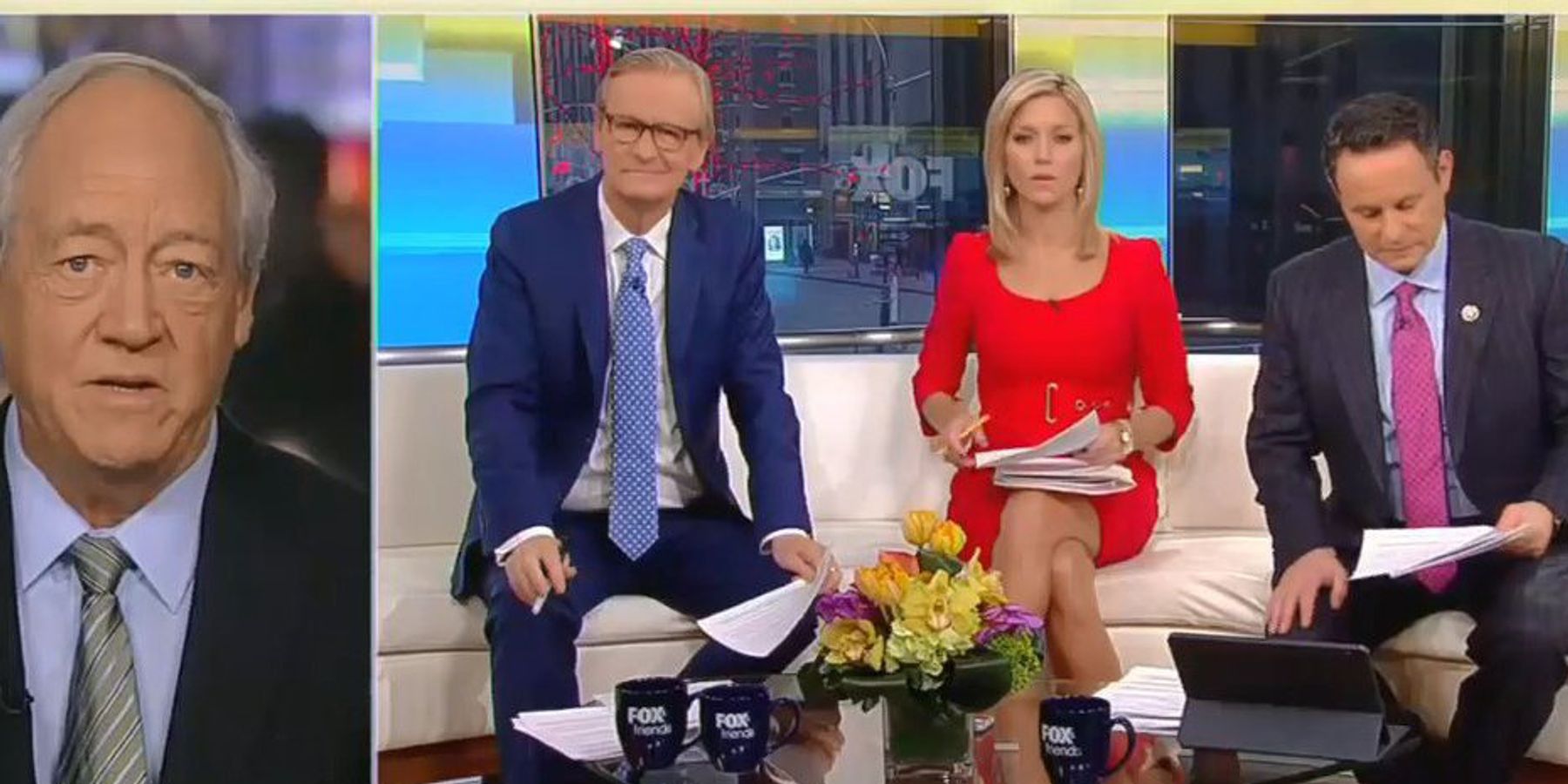
Fox & Friends, the morning gabfest that counts President Trump as both a regular viewer and unquestioning Tweeter, hosted Patrick Moore for a discussion aimed at reviling the Green New Deal.

I know something of Pat Moore, or at least his 20th Century version. He was an early and divisive leader of Greenpeace until his fellow leaders encouraged his exit in 1986. I worked there till 1991. He spent 15 years with Greenpeace, and has since spent more than twice that stretch — a prosperous 33 years — in the role of a converted, scorned environmentalist.

Cashing in on his man-bites-dog reformed Greenpeace leader story, Moore has hired out to an endless rogue's gallery of industries with environmental image problems – salmon farms, timber mills, vinyl manufacturers, atom splitters, carbon burners, and more.

Thus does the genial Canadian become the ideal Fox News vessel to present the Green New Deal to America's most gullible audience. I won't think the less of you if you say you never watch Fox News, but take five minutes to watch his gentle grilling by the show's triumvirate of couch stooges.

Pat Moore pushes nearly every climate denial button, extolling the wondrous benefits of carbon dioxide while exposing the naked avarice of the grant-grubbing science community.

Go ahead and watch. If the most powerful man in the world could take five minutes to watch this, who are you to demur?

Of course, within minutes of the segment came the Presidential Tweet:

Donald Trump's Twitter following equals the entire population of Italy. This missive got more "likes" than the entire population of Mayor Pete Buttagieg's city, South Bend, Indiana.

Pat Moore to Fox News, Fox News to Trump, Trump to his loyal millions, all without even a smidge of critical thinking.

Sociologists call it "motivated reasoning," but it's extremely generous to suggest that actual reasoning is a part of the equation.

To Trump's cherished "base," climate denial is now a faith as unshakable as the "lock her up" and "build the wall" mantras that carried him to power.

But gullibility's only home these days isn't in the Land of MAGA.

Advocates of climate action are supremely prone to their own brand of gullibility: The tempting notion that common sense, or screamingly obvious science, will guide public opinion and public policy any day now — or that climate denial will soon dry up and blow away.

I've been hearing that since Jim Hansen's landmark Senate testimony made some of the first climate change headlines in 1988. An early climate denial opus was the half-hour 1992 documentary The Greening of Planet Earth, which conceded the rise in atmospheric CO2, but like Pat Moore in 2019, schooled us that more CO2 is what plants crave.

Climate denial, whether deployed by the sincerely gullible or the supremely cynical, is alive, well, and a mortal threat.

The notion that it's on its last legs is as dangerously naïve — even if denial were not the rule in the President's house, his cabinet, and many corporate boardrooms.

Before we even get to the immense task of tackling carbon emissions, we still need to tackle ourselves.


Leading cardiology societies call for stronger protections against environmental hazards
Photo by Ella Ivanescu on Unsplash

Leading cardiology societies call for stronger protections against environmental hazards

Four international cardiology societies — the American Heart Association, the American College of Cardiology, the European Society of Cardiology, and the World Heart Federation — issued a joint statement urging for regulatory action to address the role of toxic environmental exposures in cardiovascular disease.


In short:

  • Growing evidence shows environmental exposures — including air pollution, chemical pollution, plastics, climate change, and artificial noise and light — may be contributing significantly to the rise in cardiovascular disease.
  • Of these hazards, air pollution poses the greatest risk, likely by causing inflammation in the lungs and throughout the circulatory system.
  • The multiple hazards associated with climate change like extreme heat and wildfires may also threaten cardiovascular health via dehydration, arrhythmia, and severe coronary events (such as heart attacks).


Key quote:

"A unified voice was needed to state clearly that the science is settled—and that continued inaction reflects political and structural inertia rather than scientific uncertainty.”

- Lead study author Dr. Thomas Münzel, via JAMA Medical News


Why this matters:

Cardiovascular disease is the leading cause of death worldwide, contributing to roughly 44% of deaths from noncommunicable diseases. When speaking with JAMA Medical News, lead author Dr. Münzel contributed at least 1 in 5 of the 20 million annual global cardiovascular disease deaths to environmental hazards. The authors of this statement call on both policymakers and clinicians to address environmental exposures “with the same seriousness as traditional cardiovascular risks,” fully integrating them into regulations and patient care.


Related EHN coverage:


More resources:


Münzel, T. et al. (2026). Environmental Stressors and Cardiovascular Health: Acting Locally for Global Impact in a Changing World: A Statement of the European Society of Cardiology, the American College of Cardiology, the American Heart Association, and the World Heart Federation. Circulation

Anderer, S. (2026). Cardiology Societies Urge Action on Environmental Risk Factors. JAMA Medical News
A lone firefighter training a stream of water on a huge wildfire

Number of days with weather just right for wildfires is soaring around the world

A new study shows hot, dry and windy weather that fuels extreme wildfires has nearly tripled worldwide in 45 years.
A power plant smokestack emitting smoke into the sky

The nation's largest public utility is going back to coal — with almost no say from the public

The Tennessee Valley Authority once prided itself on political independence. Data center demand and political pressure have it changing course from clean energy.
A plant-based burger on paper packaging with french fries in the background

The great veggie burger experiment in New Mexico oil and gas country

A rancher in the middle of oil country struck gold with plant-based foods before anyone else. Can he survive the fake-meat slump?
An oil tank truck driving down a highway

Inside the largest deregulatory action in US history

Can the government simply decide emissions aren’t its problem?
climate demonstrator in a crowd wearing cardboard sign on back that reads "listen to the science!")

Healthcare professionals, scientists, and children sue the EPA for backtracking on greenhouse gas regulation

Widely anticipated legal challenges question the agency’s reversal of the 2009 endangerment finding. The decision is “reckless, illogical and ignores the vast majority of public comments,” plaintiffs say.
Aerial photo of coal-fired power plant
Credit: airphoto.gr/BigStock Photo ID: 4550715

E.P.A. plans to loosen mercury rules for coal plants, documents show

Senior officials at the Environmental Protection Agency are expected to announce the move on Friday, according to people briefed on the matter.
From our Newsroom
Multiple Houston-area oil and gas facilities that have violated pollution laws are seeking permit renewals

Multiple Houston-area oil and gas facilities that have violated pollution laws are seeking permit renewals

One facility has emitted cancer-causing chemicals into waterways at levels up to 520% higher than legal limits.

Regulators are underestimating health impacts from air pollution: Study

Regulators are underestimating health impacts from air pollution: Study

"The reality is, we are not exposed to one chemical at a time.”

Pennsylvania governor Josh Shapiro speaks with the state flag and American flag behind him.

Two years into his term, has Gov. Shapiro kept his promises to regulate Pennsylvania’s fracking industry?

A new report assesses the administration’s progress and makes new recommendations

silhouette of people holding hands by a lake at sunset

An open letter from EPA staff to the American public

“We cannot stand by and allow this to happen. We need to hold this administration accountable.”

wildfire retardants being sprayed by plane

New evidence links heavy metal pollution with wildfire retardants

“The chemical black box” that blankets wildfire-impacted areas is increasingly under scrutiny.

Stay informed: sign up for The Daily Climate newsletter
Top news on climate impacts, solutions, politics, drivers. Delivered to your inbox week days.