Nowhere to go in New Bern: Climate catastrophe spurs migrants in US South

Nowhere to go in New Bern: Climate catastrophe spurs migrants in US South

Hurricane Florence ravaged North Carolina last fall. While cleanup continues and residents pick up the pieces of their life, many people in New Bern, a small community along the Neuse River in the eastern part of the state, have nothing to pick up. Homes have been destroyed and won't be rebuilt. Lives have been upended.


We visited New Bern to document the challenges of the community's most disenfranchised as public housing residents, along with other poor, disabled, elderly, and vulnerable people, are becoming a first wave of climate migrants in the U.S.—people selectively displaced by increasingly frequent storms and floods, moved because they can't afford to stay.

Their forced removal marks the sputtering end of a long effort to close down the project of government-subsidized housing in this country, leaving affordable housing to the so-called free market. And those that do stay face both psychological tolls and environmental toxins left in the storm's wake.

This is what a climate change catastrophe looks like.

Poor southerners are joining the globe's climate migrants

They put us in this "weird palliative care kind of situation, just waiting for it to die. And they're not providing any support for it while it's dying."


Lingering long after a storm, mold and mental health issues

North Carolinians are organizing against "toxic resiliency," focused on healing from trauma.

LISTEN: Visiting climate migrants in New Bern, North Carolina

"This is the worst storm I've ever endured."


Editor's note: This series is the result of a collaboration between EHN and Scalawag Magazine, an independent nonprofit magazine that covers the American South.

An image of the earth sitting on top of a gas stove burner

How climate change is redrawing the world’s political map

Climate change is altering geopolitical relationships, as nations compete for resources, redraw strategic priorities, and face new risks tied to energy, food, and water.

China renewable energy, wind and solar energy concept. Chinese flag superimposed with wind turbines and solar panels
Credit: Anton_Medvedev/BigStock Photo ID: 431444246

China has been preparing for a global energy crisis for years. It is paying off now

As other Asian economies race to conserve energy, China has huge reserves of oil and gas as well as alternative energy sources like wind and solar.

An illustration of a gas pump pouring gas into a gas tank

How Big Oil pivoted from climate-friendly messaging to normalize dependence on fossil fuels

The world’s biggest oil and gas companies have spent the last four years systematically shifting away from climate-friendly advertising to push a new message: fossil fuels are here to stay.

Industrial landscape, oil derricks in desert valley.
Credit: DogoraSun/BigStockPhoto ID: 453434903

Senator launches investigation into methane pollution in the Permian Basin

Recent satellite monitoring revealed that actual emissions from the West Texas and southeast New Mexico basin are four times higher than official estimates.
Large scale dairy operation: Open stall barn with dairy cows being fed from a tractor.

Manure-to-energy project touted as climate fix emits thousands of tons of methane

A Wisconsin project dubbed the “world’s largest manure biogas project” emits nearly 5,000 metric tons of climate-warming methane annually, roughly equivalent to emissions from 30,000 gasoline-powered vehicles, according to state data that adds to concerns about the impacts of large-scale manure digesters. 
A coal plant viewed from above with smoke emitting from towers

Trump is forcing coal plants to stay open. It could cost customers billions

In an unprecedented use of federal authority, President Donald Trump’s administration has invoked emergency powers to force a series of retiring coal plants to stay open.
A view of a mining pit with a river in the foreground

As India expands coal power, a mining town suffers

The people of Jharia, home to India’s largest coal reserves, are fueling the country’s economic growth and getting sick from the ensuing pollution.
From our Newsroom
Multiple Houston-area oil and gas facilities that have violated pollution laws are seeking permit renewals

Multiple Houston-area oil and gas facilities that have violated pollution laws are seeking permit renewals

One facility has emitted cancer-causing chemicals into waterways at levels up to 520% higher than legal limits.

Regulators are underestimating health impacts from air pollution: Study

Regulators are underestimating health impacts from air pollution: Study

"The reality is, we are not exposed to one chemical at a time.”

Pennsylvania governor Josh Shapiro speaks with the state flag and American flag behind him.

Two years into his term, has Gov. Shapiro kept his promises to regulate Pennsylvania’s fracking industry?

A new report assesses the administration’s progress and makes new recommendations

silhouette of people holding hands by a lake at sunset

An open letter from EPA staff to the American public

“We cannot stand by and allow this to happen. We need to hold this administration accountable.”

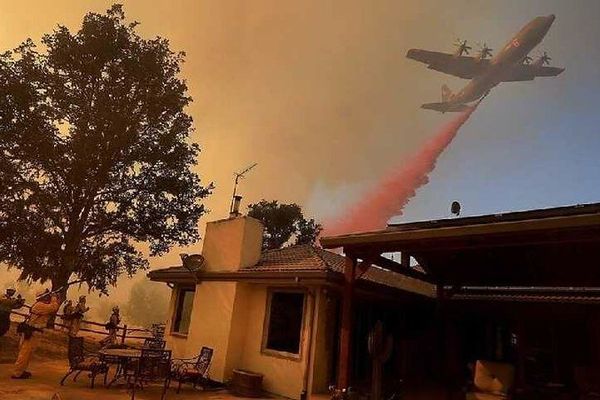
wildfire retardants being sprayed by plane

New evidence links heavy metal pollution with wildfire retardants

“The chemical black box” that blankets wildfire-impacted areas is increasingly under scrutiny.

Stay informed: sign up for The Daily Climate newsletter
Top news on climate impacts, solutions, politics, drivers. Delivered to your inbox week days.