Melting Arctic permafrost could unleash dangerous new pathogens

As the Arctic warms rapidly, thawing permafrost is releasing ancient microbes and creating new health risks that remain largely unstudied.

Valerie Brown reports for Bulletin of the Atomic Scientists.


In short:

  • The Arctic is warming four times faster than the global average, destabilizing permafrost and creating new microbial ecosystems.
  • Thawing permafrost could release ancient pathogens or facilitate the spread of new diseases as microbes travel with shipping, wildlife and resource extraction workers.
  • Limited data, especially from Russia, hinders the ability to predict or monitor emerging Arctic pathogens.

Why this matters:

Thawing permafrost could unleash microbes capable of sparking new diseases, threatening Arctic communities and potentially spreading globally. Increased shipping, resource extraction and wildlife migration create pathways for these pathogens to travel, posing significant public health risks.

Related: Polar bears are increasingly exposed to diseases due to warming Arctic

A row of wind turbines against a blue sky

Feds cite national security to stall 54 Texas wind projects

After years of trying to stop offshore wind projects, the Trump administration is now pausing routine federal permits for 165 land-based projects, including dozens in Texas.
A smokestack with smoke billowing from the top of it

California may give Big Oil billions in free climate permits

A new carbon market proposal could send billions in free permits to industry while cutting money for California programs.
A view of the Great Salt Lake with mountains in the background

Utah's fragile desert could feel like the Sahara if America's biggest data center gets built

The Great Salt Lake is drying up. What happens when a data center as large as Washington, D.C., sits next to it?
Setting sun at dusk against a red-orange sky

A closely guarded plan to cool Earth is revealed

A geoengineering company would use tiny specks of silica to block the sun's rays — and make billions of dollars.

Woman in waders standing shin-deep in southeastern swamp

How a ‘model’ for climate migration became a cautionary tale

The residents of Isle de Jean Charles in Louisiana found safety after moving to higher ground. But the experience left some of them warning others facing relocation: ‘Don’t do it.’
Computer generated 3D illustration with oil pumps, solar panels and wind turbines.
Credit: MIRO3D/BigStock Photo ID: 147195269

The American epoch of oil is collapsing. What comes next could be ugly

China is dominating the energy transition with astonishing result, while fossil fuel fascists in the US try to turn back the clock.

A woman hooking her electric vehicle up to a charger

Soaring gas prices have drivers turning to EVs — except in the US

European drivers are escaping high gas prices and buying more cheap Chinese EVs. In the U.S., that’s impossible.
From our Newsroom
Multiple Houston-area oil and gas facilities that have violated pollution laws are seeking permit renewals

Multiple Houston-area oil and gas facilities that have violated pollution laws are seeking permit renewals

One facility has emitted cancer-causing chemicals into waterways at levels up to 520% higher than legal limits.

Regulators are underestimating health impacts from air pollution: Study

Regulators are underestimating health impacts from air pollution: Study

"The reality is, we are not exposed to one chemical at a time.”

Pennsylvania governor Josh Shapiro speaks with the state flag and American flag behind him.

Two years into his term, has Gov. Shapiro kept his promises to regulate Pennsylvania’s fracking industry?

A new report assesses the administration’s progress and makes new recommendations

silhouette of people holding hands by a lake at sunset

An open letter from EPA staff to the American public

“We cannot stand by and allow this to happen. We need to hold this administration accountable.”

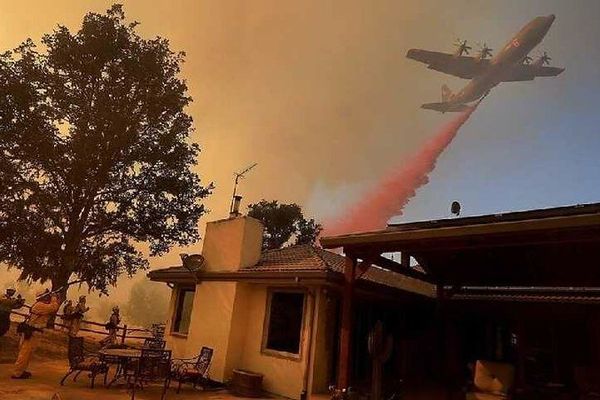
wildfire retardants being sprayed by plane

New evidence links heavy metal pollution with wildfire retardants

“The chemical black box” that blankets wildfire-impacted areas is increasingly under scrutiny.

Stay informed: sign up for The Daily Climate newsletter
Top news on climate impacts, solutions, politics, drivers. Delivered to your inbox week days.