Expanding UN climate summits hinders progress, experts say

Annual climate talks have grown too large to effectively address global warming, with critics suggesting smaller, focused events could streamline decision-making.

Bob Berwyn reports for Inside Climate News.


In short:

  • Attendance at UN climate conferences has surged from 5,000 in early years to 85,000 last year, diluting focus and straining resources.
  • Experts propose separating negotiations, expos and high-level summits to make the process more efficient and less performative.
  • Conflicts of interest, including fossil fuel industry involvement, continue to undermine progress on emissions reductions.

Key quote:

“They have grown organically, without any steering. Some people might even say it’s like cancer, out of control.”

— Benito Müller, researcher at the University of Oxford's Environmental Change Institute

Why this matters:

The sheer scale of these conferences risks alienating and excluding smaller nations and marginalized groups, perpetuating inequity in climate policy. Streamlining the process could shift attention back to meaningful emission reductions and away from superficial displays of commitment.


A man wearing a business suit riding his bike to work

Encouragement boosts people’s likelihood to take climate action

Framing climate action as “doing more good” instead of “doing less bad” makes people more willing to act and feel better about it, a study finds.
A stack of particle board viewed from the side

A climate case for turning farm waste to building materials

Wheat straw and rice husks already appear in niche construction products. A new study explores the global climate effects if they went mainstream.
Child sitting in a doorway and looking down at the ground

The world has pledged to triple climate financing for poorer countries. Is the UK about to U-turn?

The UK has been warned that cutting climate financing for poorer countries would be an “act of self-harm” that would hinder its global influence and damage food security.

The blue and white Energy Star logo sticker

Energy Star program survives Trump administration's budget cuts

Energy Star, the program that helps guide consumers to more energy-efficient appliances and electronics, has survived President Donald Trump’s attempt to kill it.
An aerial view of a nickel mining operation

Canadian nickel mine’s plan to store carbon in waste rock

The Crawford Nickel mine outside Timmins, Ontario, is receiving millions of public dollars to figure out how to lower greenhouse gas emissions.

A row of solar panels with the city of Shanghai in the background

China to see solar capacity outstrip coal capacity this year

The China Electricity Council says that, by the end of 2026, wind and solar will account for nearly half of China’s power capacity.

A tin hut with a small solar panel on the roof

Solar energy gains ground across Africa, but challenges persist

Solar power is expanding rapidly across Africa, with some countries now generating a significant share of electricity from the sun, but energy poverty, battery risks and rising costs threaten future growth.
From our Newsroom
Multiple Houston-area oil and gas facilities that have violated pollution laws are seeking permit renewals

Multiple Houston-area oil and gas facilities that have violated pollution laws are seeking permit renewals

One facility has emitted cancer-causing chemicals into waterways at levels up to 520% higher than legal limits.

Regulators are underestimating health impacts from air pollution: Study

Regulators are underestimating health impacts from air pollution: Study

"The reality is, we are not exposed to one chemical at a time.”

Pennsylvania governor Josh Shapiro speaks with the state flag and American flag behind him.

Two years into his term, has Gov. Shapiro kept his promises to regulate Pennsylvania’s fracking industry?

A new report assesses the administration’s progress and makes new recommendations

silhouette of people holding hands by a lake at sunset

An open letter from EPA staff to the American public

“We cannot stand by and allow this to happen. We need to hold this administration accountable.”

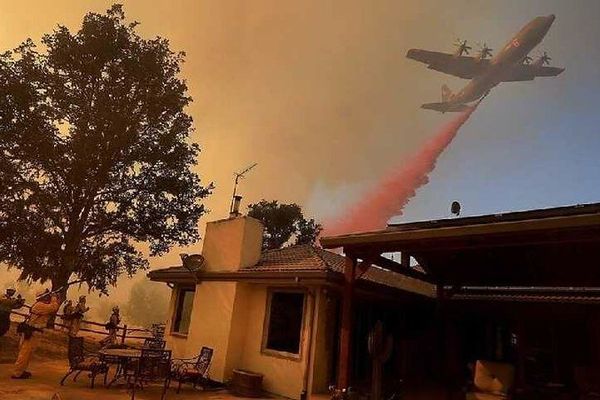
wildfire retardants being sprayed by plane

New evidence links heavy metal pollution with wildfire retardants

“The chemical black box” that blankets wildfire-impacted areas is increasingly under scrutiny.

Stay informed: sign up for The Daily Climate newsletter
Top news on climate impacts, solutions, politics, drivers. Delivered to your inbox week days.